
Why Fly Free
- Details
- Category: General - Free Flight General - Free Flight
- Published: 02 December 2020 02 December 2020
Why do modelers still fly planes without radio control, almost as they would have over 80 years ago? First of all, you surmount the challenge of making and adjusting 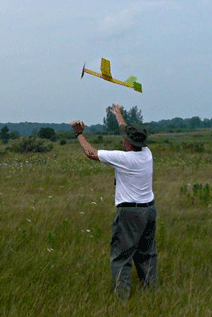 something that will fly well as it it leaves your hand or the launch table. You need to adjust control surfaces and propeller thrust line, and position the center of gravity, for the plane to fly well in climb and glide. You can build light, without radio gear, and use less power.